What Happens To Your Household If The Water Stops — Even For A Few Days?
Boil-water notices, storm-related outages, and aging local infrastructure are becoming more common talking points in communities across the country. Here's a plain-language look at why some households are choosing to learn more about water storage and backup planning — and a resource that walks through the basics, step by step.
A Few Questions Worth Sitting With
None of these are meant to alarm — just worth thinking through before an inconvenient day arrives.
What's the backup plan?
Many households haven't mapped out what they'd actually do if tap water were unavailable or unsafe for a stretch of time.
Is stored water still safe?
Water that's stored incorrectly can develop taste, odor, or contamination issues — the "how" tends to matter as much as the "how much."
Do you need an expensive system?
Whole-home filtration and large storage systems can be costly. Some households prefer to start with lower-cost, practical steps first.
Local Water Systems Aren't Immune To Disruption
Severe weather, main breaks, treatment plant issues, and regional drought conditions have all made local headlines in various parts of the country in recent years. A short-term disruption doesn't have to be a large-scale disaster to be genuinely inconvenient — a boil-water advisory or a multi-day outage can affect a household's normal routine.
This is part of why more people are looking into basic water preparedness the same way they might think about a flashlight, a first-aid kit, or an emergency fund — not out of worry, but as one more practical thing to have sorted out.
The Water Freedom System
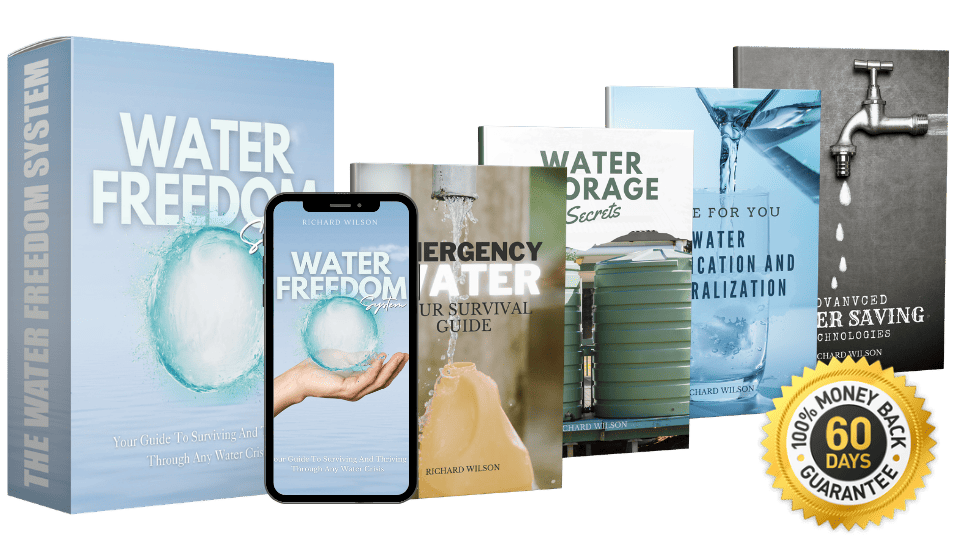
Written by Richard Wilson, this is a plain-language digital guide built around one goal: helping everyday households understand water storage, purification, and emergency planning without needing an engineering background or a large budget.
It's organized as a step-by-step system rather than a single long read, so it can be worked through gradually — a chapter or checklist at a time.
What's Included
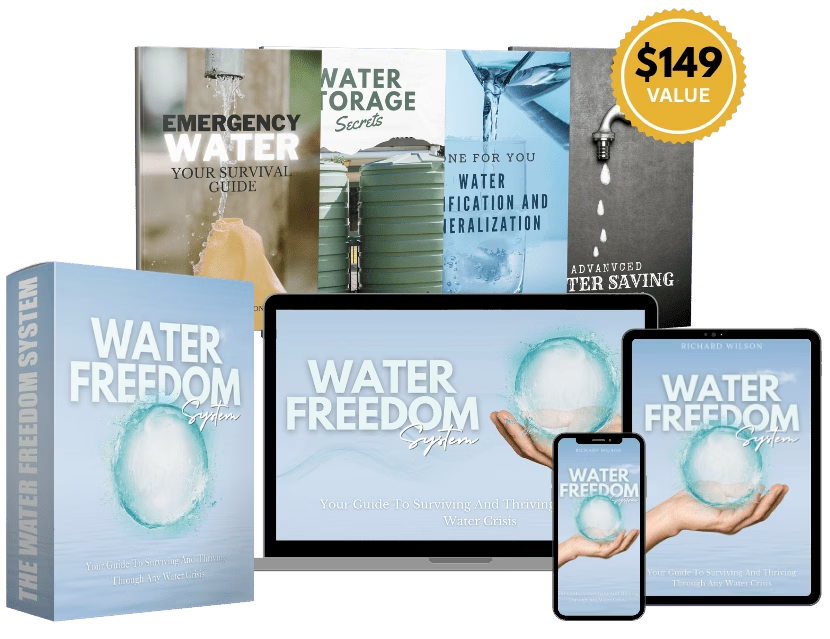
The core guide is paired with a set of shorter, focused bonus guides.
The Water Freedom System (Core Guide)
Walks through the main ideas behind household water planning, from everyday habits to longer-term storage concepts.
Emergency Water: Your Survival Guide
A shorter reference guide focused specifically on short-term emergency situations.
Water Storage Secrets
Covers considerations around storing water safely over longer periods.
Water Purification & Mineralization
An overview of common approaches people look into for treating stored or found water.
Advanced Water Saving Technologies
A look at tools and habits some households use to reduce day-to-day water use.
Physical Copy Option
A printed edition is available as an add-on for readers who'd rather keep a hard copy on a shelf.
How People Typically Use It
A simple, three-part rhythm rather than an all-at-once overhaul.
Read the core guide
Get oriented on the basics of water storage, sourcing, and treatment at a comfortable pace.
Work through the checklists
Use the bonus guides to plan storage, purification, and small household changes.
Revisit as needed
Keep it as an ongoing reference rather than a one-time read.
A Few Things That Stand Out
Plain-Language Format
Written for everyday readers, not specialists.
Practical Focus
Centers on realistic, low-cost first steps.
Bonus Reference Guides
Shorter guides for specific topics, included with access.
Digital + Physical Option
Read on any device, or add a printed copy.
A 60-Day Review Window
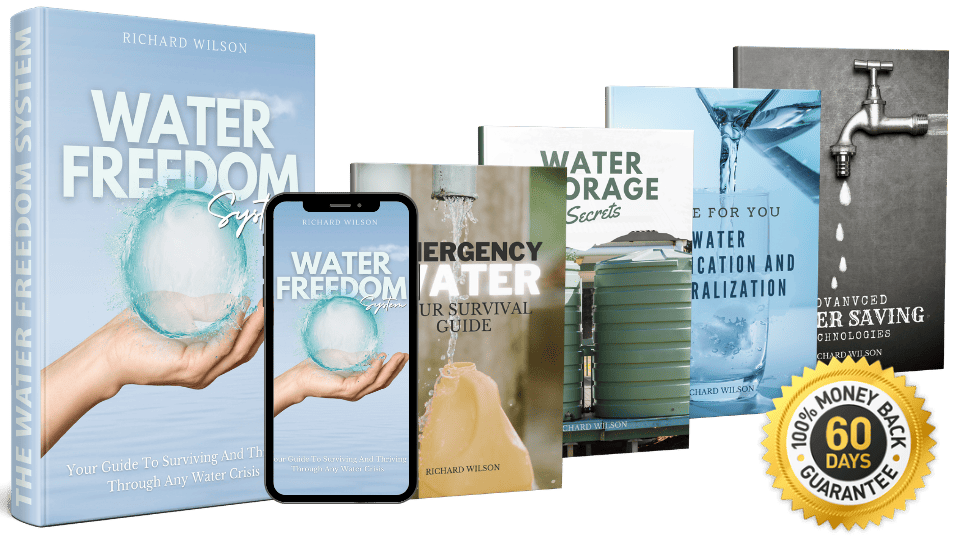
Access to the guide comes with a 60-day window to go through the material. If it turns out not to be a good fit for your household, you can request a refund through the seller within that period, according to the terms listed on the order page.
Read The Full Terms →Common Questions
Is this a physical filtration device?
No — the core product is a digital guide (with an optional printed copy add-on). It's educational material about water storage, purification concepts, and planning, not a filtration device itself.
Do I need prior experience to follow it?
It's written for general readers and organized step by step, so no specialized background is assumed. Individual comfort with the material may still vary.
How is it delivered?
Digital access is typically provided instantly after checkout, with a physical copy (if selected) shipped separately.
What if it's not useful for my situation?
There's a 60-day window to review the material and request a refund per the seller's stated terms if it doesn't end up being a good fit.
Who is this guide by?
The guide is written by Richard Wilson and distributed digitally by the seller linked on this page.
Worth Ten Minutes To Look Through
If household water planning is something you've been meaning to look into, this guide is one place to start — laid out simply, at your own pace.
Get Access To The Guide →