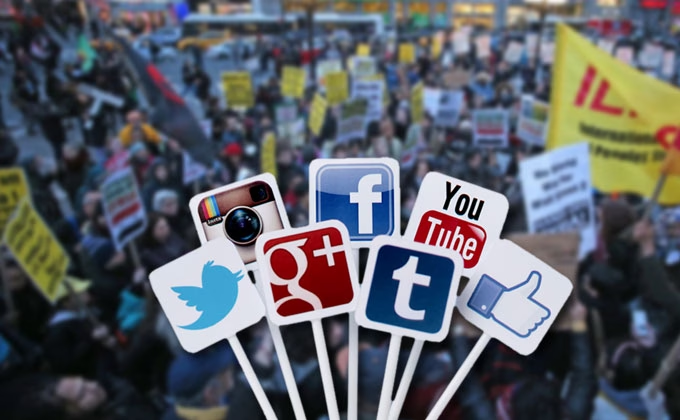
Social media has transformed nearly every aspect of modern life, including the way political campaigns are planned, executed, and experienced. Platforms such as Facebook, X (formerly Twitter), Instagram, YouTube, TikTok, and LinkedIn have become powerful tools for politicians to communicate directly with voters, share their messages, and build public engagement. Unlike traditional media, social media allows for real-time interaction, targeted communication, and widespread reach, making it an essential component of modern political campaigns.
As technology continues to evolve, understanding how social media is reshaping modern political campaigns helps explain the changing relationship between politicians, voters, and democracy.

The Shift from Traditional Campaigning to Digital Engagement
In the past, political campaigns relied heavily on television advertisements, newspapers, radio broadcasts, public rallies, and door-to-door outreach. While these methods remain important, social media has added a new dimension to political communication.
Today, candidates can instantly reach millions of people with a single post or video. They no longer depend solely on traditional media outlets to deliver their message. Instead, they can engage directly with citizens, respond to questions, and share updates in real time.
This shift has made political communication faster, more interactive, and more accessible.
Direct Communication with Voters
One of the biggest advantages of social media is the ability for political leaders to communicate directly with the public. Instead of waiting for scheduled interviews or press conferences, candidates can post updates, explain policies, and respond to current events immediately.
This direct communication helps:
- Increase transparency.
- Build trust through regular engagement.
- Share campaign messages without intermediaries.
- Reach supporters across different regions.
Voters also have the opportunity to comment, ask questions, and participate in discussions, creating a more interactive political environment.
Targeted Campaign Advertising
Social media platforms allow campaigns to deliver highly targeted advertisements based on factors such as age, location, interests, and online behavior.
This enables political teams to:
- Reach specific voter groups.
- Promote issues relevant to different communities.
- Increase campaign efficiency.
- Optimize advertising budgets.
Rather than delivering one message to everyone, campaigns can tailor content to address the concerns of various audiences.
The Power of Video Content
Short videos have become one of the most effective forms of political communication. Candidates now use live streams, interviews, behind-the-scenes footage, and short informational clips to explain their policies and connect with voters.
Video content helps simplify complex political topics while making candidates appear more relatable and approachable.
Live broadcasts also allow supporters to watch speeches, campaign events, and public discussions without being physically present.
Encouraging Citizen Participation
Social media has made political participation easier than ever before. Citizens can:
- Follow campaign updates.
- Register for events.
- Volunteer for campaigns.
- Share political content.
- Join discussions.
- Encourage others to vote.
Hashtags and online movements often bring attention to important public issues, encouraging broader civic engagement.
This increased accessibility has especially encouraged younger generations to become more involved in politics.
Real-Time News and Rapid Responses
Political events now unfold in real time across social media platforms. Candidates can quickly respond to breaking news, policy announcements, debates, or public concerns within minutes.
This speed offers several advantages:
- Immediate clarification of campaign positions.
- Faster response to misinformation.
- Continuous voter engagement.
- Greater media visibility.
However, the rapid spread of information also means campaigns must verify facts before sharing updates to maintain credibility.
Building a Personal Brand
Modern political campaigns focus not only on policies but also on the personalities behind them. Social media allows politicians to share aspects of their daily lives, community visits, charitable work, and personal interests.
This humanizes public figures and helps voters feel more connected to them beyond political speeches and debates.
Authenticity often plays a significant role in gaining public trust, especially when communication feels genuine and consistent.
Challenges of Social Media in Politics
While social media offers many benefits, it also presents important challenges.
Spread of Misinformation
False information can spread quickly online, sometimes influencing public opinion before accurate facts become available. Political campaigns, media organizations, and technology companies all play important roles in promoting accurate information.
Online Polarization
Algorithms often show users content similar to what they already believe, which can create echo chambers where people are exposed to limited perspectives.
Encouraging respectful dialogue and critical thinking remains essential for healthy democratic discussions.
Privacy Concerns
Digital campaigning often relies on user data to deliver targeted advertisements. This has raised ongoing discussions about data privacy, transparency, and ethical use of personal information.
Balancing personalized communication with privacy protections continues to be an important issue.
The Growing Influence of Young Voters
Younger generations spend significant time on social media, making digital platforms an effective way for campaigns to reach first-time and young voters.
Political content designed for these audiences often includes:
- Short educational videos.
- Interactive polls.
- Live Q&A sessions.
- Infographics.
- Issue-focused discussions.
These formats make political information more engaging and easier to understand.
The Future of Political Campaigns
As technology advances, social media is likely to play an even larger role in elections. Artificial intelligence, augmented reality, virtual events, and advanced analytics may further transform how campaigns communicate with voters.
Future campaigns are expected to become:
- More personalized.
- More data-driven.
- More interactive.
- More accessible across multiple digital platforms.
At the same time, governments, technology companies, and citizens will continue working toward promoting transparency, responsible communication, and informed public debate.